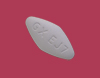
|
What
Is Epivir?
EPIVIR in combination with other antiretroviral
agents is indicated for the treatment of HIV infection.
The use of EPIVIR is based on the results of clinical
studies in HIV-infected patients in combination
regimens with other antiretroviral agents. EPIVIR
does not cure HIV infection/AIDS or prevent passing
HIV to others.
 Important
Safety Information Important
Safety Information
•
EPIVIR,
like other HIV medicines, can cause a condition
called lactic acidosis and severe liver problems.
Lactic acidosis occurs when acid builds up in
the blood, which can affect how the body functions.
In some cases, lactic acidosis can cause death.
Nausea and tiredness that don't get better may
be symptoms of lactic acidosis
•
If
your child is taking EPIVIR, your doctor will
tell you to watch carefully for signs and symptoms
of an inflamed pancreas, such as, severe stomach
pain, nausea and vomiting, mild fever, and clammy
skin
•
Patients
with hepatitis B virus (HBV) infection who take
lamivudine, the active ingredient in EPIVIR,
and then stop taking it, may get "flare-ups"
of their hepatitis. A "flare-up" is
when the disease suddenly returns in a worse
way than before. If you have HBV infection,
your doctor should closely monitor your liver
function for several months after stopping lamivudine.
You may need to take anti-HBV medicines
•
Worsening
of liver disease (sometimes resulting in death)
has occurred in patients infected with both
HIV and hepatitis C virus who are taking anti-HIV
medicines and are also being treated for hepatitis
C with interferon with or without ribavirin.
If you are taking EPIVIR as well as interferon
with or without ribavirin, and you experience
side effects, be sure to tell your doctor
•
When
you start taking HIV medicines, your immune
system may get stronger and may begin to fight
infections that have been hidden in your body,
such as pneumonia, herpes virus, or tuberculosis.
If you have new symptoms after starting your
HIV medicines, be sure to tell your doctor
•
Changes
in body fat may occur in some patients taking
antiretroviral therapy. These changes may include
an increased amount of fat in the upper back
and neck ("buffalo hump"), breast,
and around the trunk. Loss of fat from the legs,
arms, and face may also occur. The cause and
long-term health effects of these conditions
are not known at this time
•
The
most common side effects with EPIVIR were headache,
nausea, weakness or tiredness, and nasal signs
and symptoms. In children, the most common side
effects are fever, cough, skin rash, and an
enlarged liver
•
These
are not all the side effects you could have
when taking this medicine. Your healthcare professional
can talk to you about these and other side effects
with EPIVIR
•
Tell
your doctor promptly about any side effects
or other unusual symptoms you may experience
How
Does Epivir Work?
As
with all the NRTI * drugs, Epivir works by terminating
the growing DNA (gene) chain of HIV as it is trying
to reproduce itself. This results in defective
HIV particles that are unable to infect new cells.
When
taking regularly as prescribed, Epivir combination
therapy usually leads to a decrease in HIV viral
load (RNA) in the blood and an increase in the
CD4 cell count. Epivir combination therapy has
been associated with decreased rates of AIDS opportunistic
infections, improved quality of life and increased
survival.
*
NRTI: nucleoside reverse transcriptase inhibitor
What
About Drug Interactions?
TMP/SMX
(Bactrim; Septra), a treatment used to prevent
Pneumocystis pneumonia (PCP), can increase the
amount of Epivir in the body. However, it is not
necessary to change the doses of either TMP/SMX
or Epivir.
Epivir should not be taken at the same time as
Emtriva or Truvada
(containing Viread
and Emtriva). This
is because Epivir and Emtriva are very similar
and it is not believed that combining these two
anti-HIV drugs will make a regimen any more effective
against the virus.
Other drug interactions might be possible. However,
it is believed that Epivir can be safely taken
at the same time as most drugs used to treat HIV
and AIDS-related complications.
What
About Side Effects?
•
Lactic
acidosis, which can be fatal, and severe liver
problems (fatty liver) have been reported in
people taking nucleoside reverse transcriptase
inhibitors (NRTIs). These problems are more
likely to occur in HIV-positive people taking
drug regimens that contain Zerit (d4T) or Zerit
and Videx (ddI). It is possible that Ziagen
(abacavir) can also cause these side effects.
Contact your doctor immediately if you experience
nausea, vomiting, or unusual or unexpected stomach
discomfort; weakness and tiredness; shortness
of breath; weakness in the arms and legs; yellowing
of the skin or eyes; or pain in the upper stomach
area. These may be early symptoms of lactic
acidosis or liver problems.
•
Rarely,
Epivir can cause inflammation of the pancreas
(pancreatitis). Pancreatitis is a rare but serious
side effect that can be life-threatening in
some cases. Notify your doctor immediately if
you develop symptoms of pancreatitis, including
nausea, vomiting, diarrhea, and abdominal pain.
•
Another
rare side effect of Epivir is peripheral neuropathy,
which can result in pain, tingling, numbness,
or burning in the hands and/or feet. Stopping
Epivir and starting another NRTI that does not
usually cause peripheral neuropathy—for
example, Retrovir (AZT) or Ziagen (abacavir)—is
often the best way to stop peripheral neuropathy.
•
Other,
less serious side effects may occur. Continue
taking Epivir and talk to your doctor if you
experience a cough, dizziness, fatigue, stomach
discomfort, headache, and trouble sleeping.
Epivir has also been known to cause anemia (decreased
red blood cell function), hair loss, rash, and
neutropenia (decreased neutrophils, a type of
white blood cell)
•
Anti-HIV
drug regimens containing NRTIs, including Epivir,
can cause increased fat levels (cholesterol
and triglycerides) in the blood, abnormal body-shape
changes (lipodystrophy; including increased
fat around the abdomen, breasts, and back of
the neck, as well as decreased fat in the face,
arms, and legs), and diabetes. These side effects
of anti-HIV drug therapy are reviewed in our
lessons on Lipodystrophy, Facial Lipoatrophy,
and Risks To Your Heart (Hyperlipidemia).
|