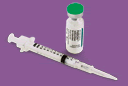
FUZEON
(enfuvirtide) is used with other anti-HIV medicines
to treat HIV-1 infection in patients who are
treatment-experienced and have detectable viral
loads even though they are taking anti-HIV medicines.
This indication is based on results from 2 studies
that lasted 48 weeks each. Patients in the studies
were treatment-experienced adults, and many
of them had advanced HIV disease. There are
no studies of FUZEON in patients who haven’t
taken anti-HIV medicines.
What
are the possible side effects of FUZEON?
Injection
site reactions
FUZEON causes injection site reactions. Almost
all people get injection site reactions with
FUZEON. Reactions are usually mild to moderate
but occasionally may be severe. Reactions on
the skin where FUZEON is injected include:
itching
swelling
redness
pain or tenderness
hardened skin
bumps
These
reactions usually happen within the first week
of FUZEON treatment and can happen again as
you keep using FUZEON. A reaction at one skin
injection site usually lasts for less than 7
days.
Injection
site reactions may be worse when injections
are given again in the same place on the body,
or when the injection is given deeper than it
should be (for example, into the muscle).
If
you are worried about the reaction you are having,
call your healthcare provider to help you decide
if you need medical care. If the injection site
reaction you are having is severe, call your
healthcare provider right away. If you have
an injection site reaction, you can discuss
with your healthcare provider ways to help the
symptoms.
An
injection site can get infected. It is important
to follow the FUZEON Injection Instructions
to lower your chances of getting an injection
site infection. Call your healthcare provider
right away if there are signs of infection at
the injection site such as oozing, increasing
heat, swelling, redness or pain.
Injection
using Biojector® 2000
Shooting nerve pain and tingling lasting up
to 6 months from injecting close to large nerves
or near joints, and bruising and/or collections
of blood under the skin have been reported with
use of the Biojector 2000 needle-free device
to inject FUZEON. If you are taking any blood
thinners, or have hemophilia or any other bleeding
disorder, you may be at higher risk of bruising
or bleeding after using the Biojector.
Pneumonia
Patients with HIV get bacterial pneumonia more
often than patients without HIV. Patients taking
FUZEON with other HIV medicines may get bacterial
pneumonia more often than patients not receiving
FUZEON. It is unclear if this is related to
the use of FUZEON. You should contact your healthcare
provider right away if you have a cough, fever
or trouble breathing. Patients are more likely
to get bacterial pneumonia if they have a low
number of CD4 cells, have a high viral load,
use intravenous (injected into the vein) drugs,
smoke or have had lung disease in the past.
It is unclear if pneumonia is related to FUZEON.
Allergic
reactions
FUZEON
can cause serious allergic reactions. Symptoms
of a serious allergic reaction with FUZEON can
include:
trouble
breathing
fever with vomiting and a skin rash
blood in your urine
swelling of your feet
Call
your healthcare provider right away if you get
any of these symptoms.
Other
side effects
The following side effects were seen more often
in patients using FUZEON with their other anti-HIV
medicines than in patients not using FUZEON
with their other anti-HIV medicines:
pain
and numbness in feet or legs
loss of sleep
depression
decreased appetite
sinus problems
enlarged lymph nodes
weight decrease
weakness or loss of strength
muscle pain
constipation
pancreas problems
These
are not all the side effects of FUZEON. FUZEON
is still being studied in children. The safety
of FUZEON in children under 6 years of age is
not known. The side effects of FUZEON for HIV-positive
children aged 6 through 16 years were similar
to those seen in adult patients.
If
you have questions about side effects, ask your
healthcare provider. Report any new or worsening
symptoms to your healthcare provider. Your healthcare
provider will tell you what to do and may be
able to help you with these side effects.
FUZEON
is not a cure for HIV infection or AIDS. FUZEON
does not prevent the transmission of HIV. People
taking FUZEON may still get opportunistic infections
or other conditions that can happen with HIV
infection. For these reasons it is very important
that you remain under the care of your healthcare
provider while taking FUZEON.
View
the Patient Product Information.