|
 What
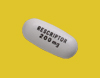
is Rescriptor? What
is Rescriptor?
 Rescriptor
is an anti-HIV medication. It is in a category
of HIV medicines called non-nucleoside reverse
transcriptase inhibitors (NNRTIs). Rescriptor
prevents HIV from entering the nucleus of healthy
T-cells. This prevents the cells from producing
new HIV and decreases the amount of virus in
the body.
Rescriptor
is an anti-HIV medication. It is in a category
of HIV medicines called non-nucleoside reverse
transcriptase inhibitors (NNRTIs). Rescriptor
prevents HIV from entering the nucleus of healthy
T-cells. This prevents the cells from producing
new HIV and decreases the amount of virus in
the body.
Rescriptor,
manufactured by Pfizer, was approved by the
U.S. Food and Drug Administration for the treatment
of HIV in 1997.
Rescriptor
must be used in combination with other drugs
to treat HIV. It is usually combined with two
nucleoside analogues.
Potential
side effects and toxicity
The
most common side effect of Rescriptor is skin
rash. In clinical trials, approximately one
of every four (25%) HIV-positive people who
took the drug developed a rash. Most of these
cases involved either mild or moderate rash—the
rashes either improved on their own or were
managed using a mild steroid cream or oral medication.
If you experience rash while taking Rescriptor,
be sure to report it to your doctor.
What
are some drug interactions?
Rescriptor
is broken down (metabolized) by the liver, like
many medications used to treat HIV and AIDS.
This means that Rescriptor can interact with
other medications. Rescriptor can lower or raise
the levels of other medications in the body.
Similarly, other medications can lower or raise
the levels of Rescriptor in the body. While
many interactions are not a problem, some can
cause your medications to be less effective
or increase the risk of side effects.
Tell
your doctors and pharmacists about all medicines
you take. This includes those you buy over-the-counter
and herbal or natural remedies, such as St.
John’s Wort. Bring all your medicines when
you see a doctor, or make a list of their names,
how much you take, and how often you take them.
Your doctor can then tell you if you need to
change the dosages of any of your medications.
The
following medications should not be taken while
you are being treated with Rescriptor:
Antibiotics:
Priftin (rifapentine), Mycobutin (rifabutin),
Rifadin (rifampin)
Antihistamines: Hismanal (astemizole)
Acid reflux/heartburn medications: Propulsid
(cisapride), Tagamet (cimetidine), Pepcid
(famotidine), Zantac (ranitidine), Prevacid
(lansoprazole), Nexium (esomeprazole), Prilosec
(omeprazole), Protonix (pantoprazole), and
other H2 antagonists and proton-pump inhibitors.
Sedatives: Versed (midazolam) and Halcion
(triazolam)
Antimigraine medications: Wigraine and
Cafergot (ergot medications)
Cholesterol-lowering medications (statins):
Zocor (simvastatin) and Mevacor (lovastatin).
Nucleoside
reverse transcriptase inhibitors (NRTIs) can
be combined safely with Rescriptor.
Rescriptor
can increase the blood levels of all of the
available protease inhibitors. In turn, the
dose of the protease inhibitor being used may
need to be decreased.
If
you take methadone, Rescriptor may increase
the amount of it in your blood. It might be
necessary to change your dose of methadone if
you combine it with Rescriptor.
Cholesterol-lowering
drugs, also known as "statins," can
interact with Rescriptor. There are two statins
that should not be used with Rescriptor:
Zocor (simvastatin) and Mevacor (lovastatin).
Levels of these two drugs can become significantly
increased in the bloodstream if the are combined
with Rescriptor, which increases the risk of
side effects. The two statins that are considered
to be the safest in combination with Rescriptor
are Pravachol (pravastatin) and Lescol (fluvastatin).
It is also possible to take Rescriptor with
Lipitor (atorvastatin) or Crestor (rosuvastatin),
although Rescriptor can increase Lipitor and
Crestor levels in the bloodstream. If Lipitor
or Crestor is prescribed, it's best to begin
treatment with the lowest possible dose of the
drug and then increase the dose if necessary.
Rescriptor
can interact with some medications used to treat
TB, MAC and other bacterial infections. Rifadin
(rifampin) can decrease Rescriptor levels (these
two drugs should not be used together). Rescriptor
can increase Mycobutin (rifabutin) levels and
Mycobutin can decreased Rescriptor levels (these
two drugs should not be used together). Rescriptor
can also increase Biaxin (clarithromycin) levels
and Biaxin can decrease clarithromycin levels
(if Biaxin must be used, your doctor should
monitor your kidneys carefully).
It
is not known if Rescriptor interacts with oral
contraceptives/birth control pills (ethinyl
estradiol).
Blood
levels of Viagra (sildenafil) and Levitra (vardenafil),
two drugs used for erectile dysfunction, likely
increase if they are combined with Rescriptor.
In turn, it is best to use a lower dose of these
drugs in order to reduce the risk of side effects.
What
is known about Rescriptor?
Rescriptor
is available in 100mg tablets and 200mg capsules.
The total daily dose is 400mg three times a
day—either 4 tablets or 2 capsules in the
morning, afternoon, and evening. The capsules
are swallowed whole with a glass of water, juice,
soda, or milk. The tablets can be dissolved
in water or another liquid so that they are
easier to swallow.
You
may take Rescriptor either with or without food.
You
should not take Rescriptor within an hour of
taking an antacid medicine (e.g., Tums, Mylanta).
This is because Rescriptor needs acid in the
stomach in order to be absorbed properly.
Some
people have a medical condition called achlorhydria.
This is a minor problem resulting in low amounts
of acid in the stomach. HIV-positive people
who have achlorhydria should take Rescriptor
with a liquid that contains some acid, such
as orange or cranberry juice.
Rescriptor
is not approved for use in HIV-positive children.
To learn about treatment options available to
children.
For
HIV-positive adults beginning HIV drug therapy
for the first time, Rescriptor is not listed
as a recommended NNRTI option by the United
States Department of Health and Human Services
in its treatment guidelines. The NNRTI Sustiva
(efavirenz) is listed as the "preferred"
option and the NNRTI Viramune (nevirapine) is
listed as an "alternative" option.
To learn more about these recommendations and
options.
If
your viral load becomes detectable while taking
a drug regimen that contains Rescriptor, your
doctor can order a drug-resistance test to see
which drugs your virus are becoming less sensitive
to.
|